Few houseplants combine beauty, resilience, and functionality quite like the Spider Plant (Chlorophytum comosum). Recognizable by its arching green-and-white striped leaves and cascading baby offshoots, the spider plant has become a staple in homes, offices, and public spaces around the world. In fact, it is often one of the first plants beginners turn to, not only for its easy care but also for the way it breathes life—literally—into any environment.
A Plant of Many Nicknames
The spider plant goes by many affectionate names: Airplane Plant, Ribbon Plant, Hen-and-Chickens, and Spider Ivy. Its nickname comes from the way its plantlets, called “spiderettes,” dangle from long stems like little spiders on a web. These spiderettes are miniature versions of the mother plant and can be easily rooted, making this one of the easiest plants to propagate and share.
Origins and History
Native to the tropical and southern regions of Africa, the spider plant has a long history of cultivation. It was first popularized in Europe in the late 18th century and later found its way into households worldwide. Its adaptability and tolerance for a wide range of conditions helped cement its reputation as the perfect beginner’s houseplant.
Why the Spider Plant is a Favorite
- Air-Purifying Qualities
NASA’s famous Clean Air Study ranked the spider plant among the top air-purifying houseplants. It has the ability to absorb toxins such as formaldehyde, xylene, and carbon monoxide, improving indoor air quality naturally. - Easy Care and Low Maintenance
Spider plants thrive in a variety of conditions. They tolerate indirect light, occasional neglect, and even variable watering schedules. This makes them almost foolproof, even for those who claim they can’t keep plants alive. - Aesthetic Appeal
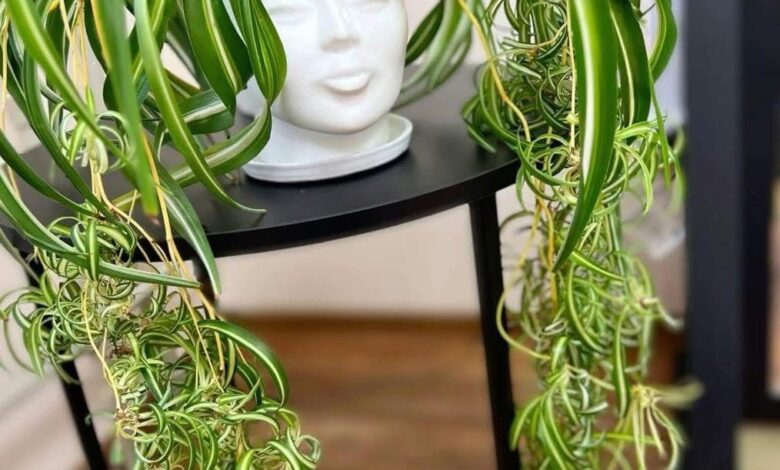
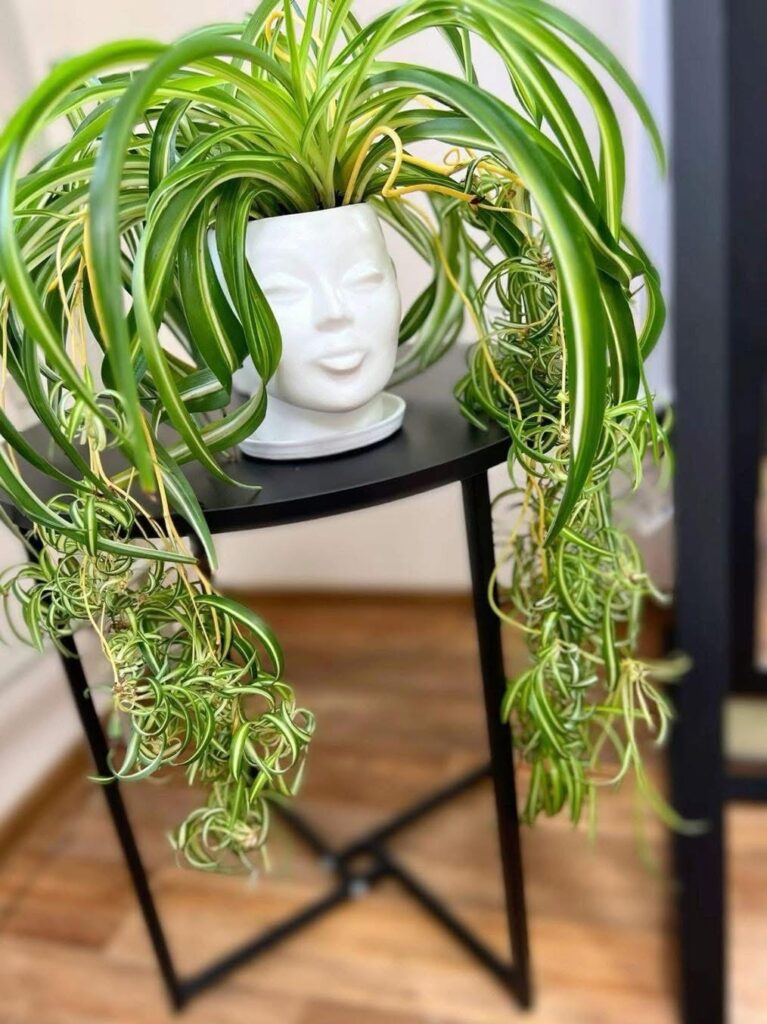
With their fountain-like arching leaves and cascading spiderettes, spider plants bring softness and flow to interior décor. When placed in a hanging basket or a stylish planter, such as the face-shaped pot in your photo, they create a striking, almost whimsical visual effect. - Pet-Friendly
Unlike many popular houseplants, spider plants are non-toxic to cats and dogs, according to the ASPCA. This makes them an ideal choice for households with curious pets.
Growing Conditions and Care Tips
- Light: Bright, indirect light is best, but spider plants also do well in medium light. Avoid harsh direct sunlight, which can scorch the leaves.
- Watering: Keep the soil lightly moist, allowing it to dry slightly between waterings. Overwatering may cause root rot, while underwatering can lead to brown tips.
- Humidity: Spider plants appreciate moderate humidity but adapt well to drier indoor air. Misting or a pebble tray can help in very dry climates.
- Soil: A well-draining potting mix is ideal. Spider plants dislike soggy conditions.
- Fertilizer: Feed with a balanced houseplant fertilizer every 2–4 weeks during the growing season (spring and summer).
Propagation: A Plant that Gives Back
One of the spider plant’s most charming features is its generosity. The small spiderettes that grow on long stems can be rooted in soil or water to create new plants. This makes it one of the most shareable houseplants, passed from one plant lover to another as a gift of greenery.
Creative Display Ideas
The photo you shared is a perfect example of how display choices can elevate the spider plant’s appeal. The planter shaped like a human face transforms the cascading leaves into “hair,” creating a playful and artistic look. Similarly, spider plants thrive in:
- Hanging baskets that showcase their long, trailing spiderettes.
- High shelves where the plant can cascade naturally.
- Grouped arrangements with other houseplants for a lush, indoor jungle feel.
Common Issues and How to Solve Them
- Brown Leaf Tips: Often caused by fluoride in tap water or inconsistent watering. Use distilled or rainwater if possible.
- Pale Leaves: May indicate too little light. Move the plant closer to a bright window.
- Crowded Roots: Spider plants grow quickly and often need repotting every year or two.
Symbolism and Benefits Beyond Beauty
In many cultures, spider plants are considered symbols of health, vitality, and protection. Their ability to multiply easily is also seen as a representation of abundance and prosperity. Combined with their air-cleaning powers, they bring not just beauty but also wellness into the home.
Final Thoughts
The spider plant isn’t just a decorative touch—it’s a living companion that rewards even the most casual care with fresh growth, cleaner air, and endless opportunities to propagate. Whether styled in a whimsical face planter, hung in a sunlit corner, or gifted to friends and family, this plant has a way of making every space feel a little more alive.