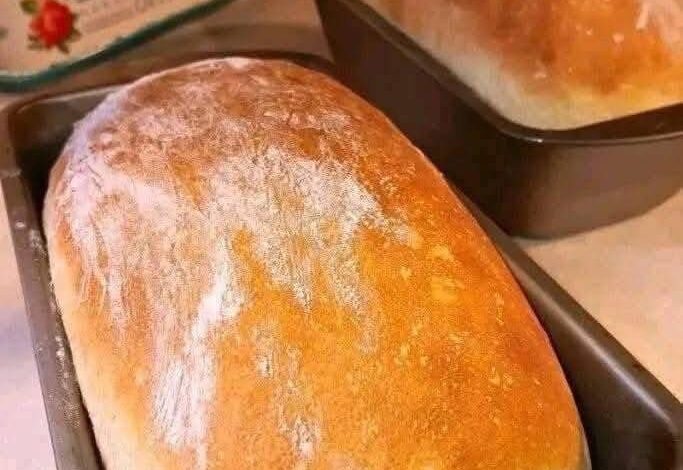
I don’t buy bread anymore because this recipe changed everything. It’s a no-knead, no-egg, no-butter bread that anyone can make with basic ingredients. It’s soft inside, crisp on the outside, and perfect for sandwiches, toast, or just enjoying with a bit of olive oil. You don’t need fancy equipment or experience—just a bowl, a spoon, and a bit of patience. Here’s how to make the easiest and cheapest homemade bread ever.
Ingredients
3 cups all-purpose flour
1 and 1/2 cups warm water (about 40°C)
1 teaspoon sugar
1 teaspoon salt
1 teaspoon instant dry yeast
Instructions
In a large bowl, combine the warm water, sugar, and yeast. Stir lightly and let it rest for about 10 minutes until the mixture becomes foamy. This step helps activate the yeast. Add the salt and flour gradually while mixing with a wooden spoon or spatula until a sticky dough forms. Do not knead it. Just make sure all the flour is incorporated. Cover the bowl with plastic wrap or a clean towel and let the dough rise in a warm spot for 1 to 2 hours, or until it doubles in size. Once the dough has risen, dust your hands and a surface with a bit of flour. Transfer the dough onto the surface and gently shape it into a round or oval loaf without pressing too much air out. Place the dough onto parchment paper and let it rest for another 30 minutes. Meanwhile, preheat your oven to 220°C (430°F). If you have a cast iron pot or Dutch oven, place it inside while preheating. When ready, carefully transfer the dough (with parchment paper) into the hot pot or onto a baking tray. Cover with the lid if using a Dutch oven. Bake for 30 minutes covered, then remove the lid and bake for an additional 10 to 15 minutes until the crust is golden brown. Remove the bread and let it cool completely on a wire rack before slicing.
Methods
This method uses slow fermentation instead of kneading to develop the gluten structure. The long rest time gives the bread its airy texture and chewy bite. The hot baking environment helps form a crispy crust while keeping the inside soft and moist.
History
No-knead bread became popular in the early 2000s after a recipe by Jim Lahey of Sullivan Street Bakery was featured in The New York Times. The technique simplified traditional bread-making, allowing home bakers to achieve artisan-quality loaves with minimal effort.
Benefits
This bread is budget-friendly, requires no special skills, and uses pantry staples. It’s free from eggs, butter, and dairy, making it suitable for vegans. It has a lower fat content than commercial bread and doesn’t contain preservatives or additives. The long fermentation also improves flavor and digestibility.
Formation
To get perfect results, ensure the yeast is active, use the right water temperature, and allow proper rising time. The dough should be sticky but manageable. Using a Dutch oven or preheated pot creates steam, which is essential for that bakery-style crust.
Conclusion
This no-knead, no-egg, no-butter bread is proof that simplicity can deliver amazing results. Once you try it, you’ll never want to buy store bread again. It’s easy, cheap, and absolutely delicious whether served warm with soup or toasted for breakfast.
Lovers
People love this bread for its simplicity and authentic homemade taste. It’s ideal for beginners and experienced bakers alike, offering the satisfaction of fresh bread with minimal work. Each loaf comes out rustic, wholesome, and irresistible.