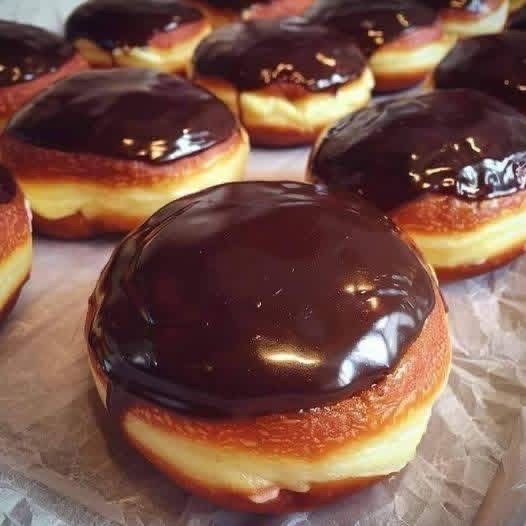
Donut worry — be happy! These fluffy, yeast-raised donuts are filled with silky vanilla pastry cream and topped with a glossy chocolate glaze. I’ll walk you through everything: ingredients (US + metric), step-by-step dough, pastry cream, frying, filling, glaze, tips, troubleshooting, storage, nutrition estimate, and tasty variations. Let’s go.
Introduction & quick overview
Boston Cream Donuts = soft, pillowy yeast donut + thick vanilla pastry (crème pâtissière) + shiny chocolate glaze. They’re essentially the donut cousin of the Boston Cream Pie. Time: about 3–4 hours total including rising and chilling (most time is passive). Makes ~12 standard donuts (about 10–14 depending on size).
Ingredients
For the dough (yields ~12 donuts)
- 1 cup whole milk (240 ml), warmed to ~110–115°F (43–46°C)
- 2 1/4 tsp (one packet) active dry yeast (7 g)
- 1/4 cup granulated sugar (50 g)
- 3 1/2 cups all-purpose flour (440 g), plus extra for dusting
- 1/2 tsp fine sea salt (3 g)
- 2 large eggs, room temperature
- 1/4 cup unsalted butter (56 g), softened
- 1 tsp vanilla extract (5 ml)
- Oil for frying (neutral oil like vegetable, canola, or sunflower) — about 6 cups (1.4 L) depending on pot size
For the pastry cream (crème pâtissière) — filling
- 2 cups whole milk (480 ml)
- 1/2 cup granulated sugar (100 g), divided
- 4 large egg yolks
- 1/4 cup cornstarch (32 g) or 1/3 cup (42 g) all-purpose flour (cornstarch gives silkier cream)
- 2 tbsp unsalted butter (28 g)
- 1 tsp vanilla extract or 1 vanilla bean scraped (5 ml)
For the chocolate glaze
- 4 oz (115 g) semi-sweet chocolate (chopped) or good quality chocolate chips
- 1/3 cup heavy cream (80 ml)
- 1 tbsp unsalted butter (14 g) — optional, for shine
- 1 tsp corn syrup or light honey — optional, for gloss
Tools you’ll need
- Stand mixer with dough hook (recommended) or mixing bowls + strong arm
- Rolling pin (optional if shaping by hand)
- Donut cutter or 2 round cutters (about 2½–3″ / 6–7.5 cm) or a glass
- Heavy pot or Dutch oven for frying + candy thermometer (or an instant-read thermometer)
- Piping bag with long plain tip (for filling)
- Whisk, spatula, saucepan
Step-by-step
1. Bloom the yeast
- Warm 1 cup milk to 110–115°F (43–46°C). Not hotter or it will kill the yeast.
- In a small bowl, stir the warm milk with 1/4 cup sugar until mostly dissolved. Sprinkle the yeast over the milk, stir gently, and let sit 5–10 minutes until foamy. If it doesn’t foam, the yeast may be dead — start with fresh yeast.
2. Make the dough
- In the bowl of a stand mixer, combine 3 1/2 cups flour and 1/2 tsp salt.
- Add 2 eggs, 1 tsp vanilla, the softened butter, and the foamy yeast-milk mixture.
- Mix with the dough hook on low, then medium, until the dough comes together (about 5–7 minutes). The dough should be slightly sticky but smooth and elastic. If too wet, add up to 1–2 tbsp flour; if too dry, add 1 tbsp milk.
- Shape into a ball. Place in a lightly oiled bowl, cover with plastic wrap or a damp towel, and let rise in a warm draft-free spot until doubled — about 60–90 minutes depending on room temperature.
3. While dough rises — make the pastry cream
- In a saucepan, heat 2 cups milk with half the sugar (1/4 cup) and vanilla until just simmering. Remove from heat.
- In a bowl, whisk 4 egg yolks with remaining 1/4 cup sugar and 1/4 cup cornstarch (or 1/3 cup flour) until pale and smooth.
- Temper the yolks: slowly add ~1/3 of the hot milk to yolks while whisking, then pour the yolk mixture back into the saucepan with the remaining milk, whisking constantly.
- Return to medium heat and whisk until the mixture thickens and comes to a boil — about 1–2 minutes after thickening. Boil 30 seconds while whisking to cook out the starch taste.
- Remove from heat, whisk in 2 tbsp butter. Transfer to a clean bowl, press plastic wrap directly on the surface to prevent a skin, and chill in fridge until firm (at least 1 hour). For quicker use, place the bowl in an ice bath and chill.
4. Shape the donuts
- After dough has doubled, gently deflate and turn onto a lightly floured surface. Roll out to about 1/2″ (1.3 cm) thickness.
- Cut rounds with a 2½–3″ cutter. Reroll scraps once. Place rounds on a parchment-lined sheet, leaving 1–2″ between them.
- Cover lightly with plastic or a towel and let rise again until puffy, about 30–45 minutes (they may not double but should look soft and pillowy).
5. Heat the oil
- Heat oil in a deep pot to 350°F (175°C). Use a candy thermometer. Maintain 350°F for frying. If oil gets hotter, donuts brown too fast and stay raw inside.
6. Fry the donuts
- Gently slide 2–3 risen donuts into the oil (don’t crowd). Fry about 60–90 seconds per side until golden brown — flip once. Total ~2–3 minutes depending on size and thickness. Thicker donuts take longer.
- Remove with a slotted spoon to a wire rack over a sheet pan lined with paper towels to drain. Let cool until warm — don’t fill hot donuts or the cream will melt out.
Safety tip: keep oil away from draft and children. Never leave hot oil unattended.
7. Fill the donuts
- Fit a piping bag with a long plain tip (or use a skewer and syringe). Fill the bag with chilled pastry cream.
- Insert the tip into the side (or bottom) of each donut and squeeze about 2–3 tbsp pastry cream into each donut until gently plump. If using a skewer: poke two holes and pipe into both to distribute.
8. Make the chocolate glaze
- Heat 1/3 cup heavy cream until steaming but not boiling. Pour over chopped chocolate in a bowl. Let sit 1 minute, then whisk until smooth.
- Stir in 1 tbsp butter and 1 tsp corn syrup if using — for shine and easier setting. Let cool slightly to thicken but remain pourable.
- Dip the top of each filled donut into the glaze, letting excess drip off. Place back on rack to set. The glaze firms but stays glossy.
Troubleshooting & tips
- Dough too sticky? Add flour 1 tbsp at a time. Dough should be tacky but manageable.
- Donuts not rising? Yeast may be old or milk too hot/cold. Proof yeast first — it should foam. Warm environment helps.
- Raw center after frying? Oil too hot (exterior browns too fast) or donuts too thick. Lower temp to 340–350°F and fry a touch longer. Use thermometer.
- Pastry cream grainy? That can happen if cooked too fast or eggs scrambled. Whisk constantly and cook gently; strain the cream through a fine sieve after cooking for ultra-smooth texture.
- Glaze too thin? Let it cool a bit to thicken. If too thick, warm slightly or add a teaspoon of cream.
Make-ahead & storage
- Pastry cream: up to 3 days in fridge, covered.
- Unfilled donuts: refrigerate overnight (wrap) or freeze in airtight bag up to 1 month. Fry from frozen? Best to thaw.
- Filled donuts: best same day. In fridge, they’ll last 1–2 days but will soften as the cream wets the dough. Bring to room temp before serving for best texture.
Variations & serving ideas
- Baked version: Bake 350°F for ~12–15 minutes until golden, then fill and glaze. Texture differs (less greasy).
- Mini donuts: Use smaller cutter and shorten frying time. Great for parties.
- Flavor twists: Use chocolate pastry cream, coffee pastry cream, or fruit curd instead of vanilla. Top with white chocolate, sprinkles, or caramel instead of chocolate glaze.
- Vegan option: Use plant milk, aquafaba or flax egg replacer, vegan butter, and a cornstarch-based pastry cream (requires recipe adjustments).
Nutrition (approximate per donut, filled & glazed; for 12)
Estimated: ~380–480 kcal each (depends on size), 18–25 g fat, 40–50 g carbs, 5–8 g protein. These are indulgent treats — enjoy mindfully!
Final notes / Serving
Serve slightly warm or room temperature so the pastry cream and glaze are perfect. These are crowd-pleasers — expect oohs and ahhs. If you want, I can convert this to a smaller recipe, make a baking-only version, or give a pastry-cream recipe for chocolate filling — say the word!